Car batteries are taken for granted—until something goes wrong. While it's rare, a car battery that overheats or catches fire is a serious risk. These types of failures don’t just kill the battery; they can damage your electrical system, start an engine fire, or put you in real danger.
So, what actually causes a battery to get that hot? And how can you prevent something this extreme from happening to your vehicle? Let’s take a closer look at why batteries overheat and what steps you can take to avoid the worst-case scenario.
Overcharging and Voltage Problems
One of the most common reasons a car battery overheats is overcharging. When too much current flows into the battery—usually due to a faulty alternator or charging system—it produces excess heat. Over time, this heat can cause the battery to swell, leak, or even vent flammable gases.
In severe cases, this buildup of gas and heat can result in a fire, especially if there’s a spark nearby or the battery is in close contact with hot engine components. This is why electrical system checks are important , especially if your battery is new and still shows signs of strain.
Modern vehicles rely on smart charging systems to regulate voltage, but when these systems fail or misread battery levels, the result can be dangerously high voltage flowing into the battery for too long.
Short Circuits and Internal Failures
Batteries contain tightly packed plates and chemicals that store and release electricity. If something goes wrong inside—whether due to manufacturing defects, age, or physical damage—a short circuit can develop. This allows the current to bypass the normal flow path and heat up rapidly.
These internal shorts may not be visible from the outside, but they can cause the battery to heat up without warning . If you’ve ever noticed a strong rotten egg smell or heard a faint hissing from the battery, those are signs something inside is going wrong.
A cracked casing or swelling battery body is another red flag that the internal components are overheating and breaking down. In that condition, even light vibrations from the road could be enough to trigger a failure.
Poor Cable Connections or Corrosion
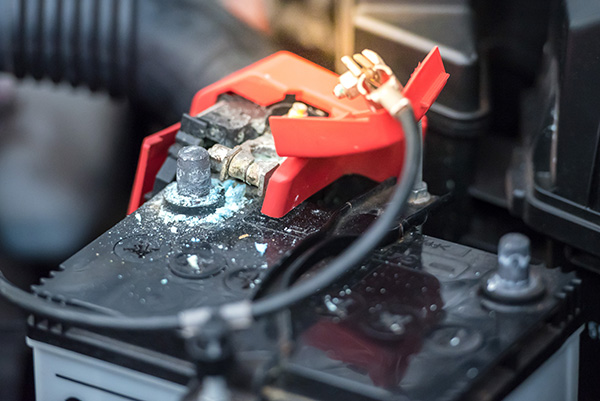
Loose or corroded battery terminals aren’t just an annoyance—they’re a fire hazard. When the battery cables don’t have a solid connection, they can arc or spark. These tiny bursts of heat can ignite gases emitted from the battery or heat up surrounding materials enough to start a fire.
This kind of overheating usually doesn’t come from inside the battery, but it can look like it did. Melted cable insulation, scorched terminal ends, or blackened battery tops are all signs of electrical arcing—a problem that starts small and can get dangerous fast if ignored.
It’s also worth noting that using the wrong size battery or installing it without securing the cables properly can make these issues more likely to occur.
Exposure to Extreme Heat
Batteries are designed to operate within a certain temperature range. In places like Raleigh, NC, where summer heat can get intense, high under-hood temperatures combined with prolonged driving or a weak cooling system can push a battery past its safe limits.
This isn’t usually enough to cause a fire on its own, but it accelerates wear and increases the likelihood of other failures—especially when paired with overcharging or poor airflow in the engine bay.
Batteries exposed to high heat on a daily basis tend to degrade faster and may leak or vent gas as they age. Keeping your engine properly cooled and your battery shielded from direct heat sources is key.
Old, Low-Quality, or Damaged Batteries
No battery lasts forever. As they age, the materials inside break down and become less stable. Older batteries are more prone to short circuits, swelling, and fluid leaks—especially if they’ve been ignored for too long.
Using a cheap, off-brand, or mismatched battery also increases the risk. These units may not meet the same safety standards or provide reliable performance under stress. If the battery isn’t rated for your car's electrical demands, it could overheat even under normal conditions.
Visual signs like leaking acid, cracks, or swelling should never be ignored. If your battery is more than 4–5 years old and has trouble holding a charge, it’s time to replace it before it fails.
From overheating risks to everyday maintenance, Torque Automotive in Raleigh, NC, is your go-to for battery and electrical system care. Book your appointment today.